

Easy Sew: 3D Effect Appliqué Tie
Free Tutorial and Printable Pattern
Difficulty: Easy
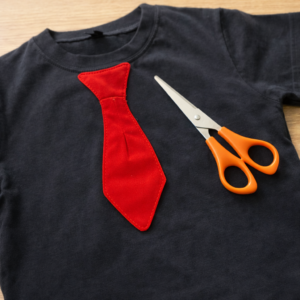
Design and make a simple, quick tie appliqué for a baby or toddler’s onesie or T-shirt. This one-size appliqué is fast to sew and easy to customise. The completed tie measures approximately 16 cm long.
You can choose to make the tie with or without soft filling. Both versions include a pleat to give the tie shape and dimension, and both are constructed using just two pattern pieces.
A tie appliqué is a fun and imaginative solution for dressing up little ones for special occasions, or simply because it looks adorable. Best of all, there’s no need to worry about tying a real tie or creating a choking hazard. An appliqué tie is a safe, decorative option for babies and toddlers.
This project is quick, inexpensive, and highly customisable. You can use fabric scraps, favourite prints, or plain woven fabrics. All you need is the free printable PDF pattern, basic sewing tools, and a little sewing knowledge.
What You’ll Need
Seam allowance: 5 mm / 0.5 cm / ¹³⁄₆₄” (included in the pattern)
A T-shirt or onesie to attach the tie to
Fabric (scraps, fat quarters, woven prints or plains)
Scissors, thread, and basic sewing tools
Soft toy filling (optional)
Please note: illustrations used in the tutorial are not to scale.
Option 1: No Stuffing
Print the PDF pattern and cut out Templates A and B.
The pattern includes a 0.5 cm seam allowance.
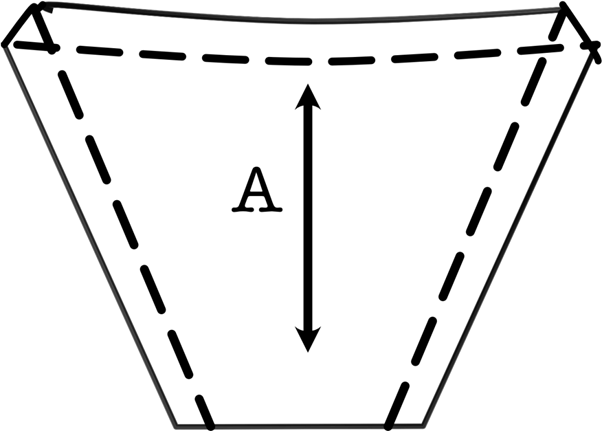
Cut each template twice from your fabric.Template A:
Place the two pieces right sides (RS) together and stitch along the three edges (both sides and the longer edge).
Clip the corners, turn right side out, and press.Template B:
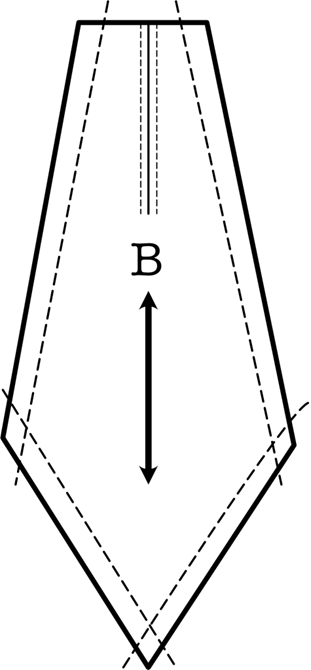
Place the two pieces RS together and stitch around all edges except the top.
Clip the corners, turn right side out, and press.Using the pattern, transfer the pleat line onto the wrong side (WS) of Template B (the side that will sit against the garment).
Fold along the pleat line and press.Stitch a straight line 5 mm from the fold, sewing 5 cm down, as marked on the pattern.
Backstitch securely at the top and bottom.Press the pleat flat.
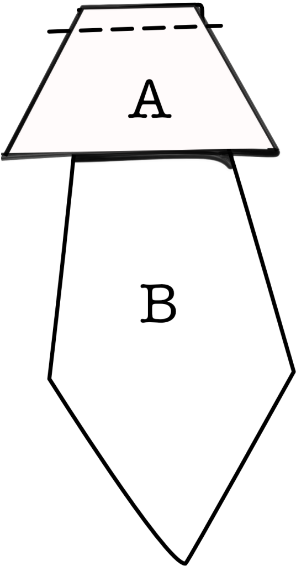
Attach Templates A and B, right sides together, and stitch using a 0.5 cm seam allowance.
Press, and finish the raw edge with a serger or overlocker if desired.Pin the tie in place on the garment.
Check that it is centred (tip: fold the garment in half to find the centre point).When happy with the placement, appliqué the tie to the garment using either:
A small straight stitch, or
A very tight zigzag stitch close to the edge.
Example shown on an 18–24 month T-shirt.




Option 2: With Stuffing
(This gives the tie a soft, squishy look and feel.)
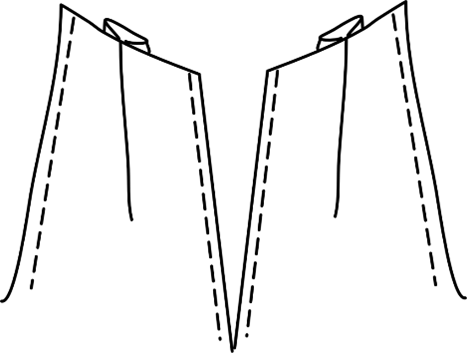
The main difference is that Template B is pleated twice, allowing space for the stuffing.
Template A:
Place the two pieces RS together and stitch along the three edges.
Clip the corners, turn right side out, and press.Template B:
Transfer the pleat line onto both pieces on the WS of the fabric.
Fold along the pleat lines and press.Stitch a straight line 5 mm from the fold, sewing 5 cm down, as marked on the pattern.
Reverse stitch securely at the top and bottom.Press the pleats flat.
Place the two Template B pieces RS together and stitch around all edges except the top.
Clip the corners, turn right side out, and press.Important: Check carefully for any gaps in the stitching.
Lightly fill both shapes with soft toy filling.
Do not overfill.Attach Templates A and B, right sides together, and stitch using a 0.5 cm seam allowance.
Reverse stitch to secure, then press.
Finish the raw edge with a serger or overlocker if desired.Pin the tie in place on the garment and check it is centred.
Appliqué the tie to the garment using a small straight stitch or tight zigzag stitch close to the edge.
Check for loose threads, stray stuffing, and any gaps before allowing a baby or young child to wear the garment.
Finished!
Congratulations. You’ve made a 3D tie appliqué for your child’s T-shirt or onesie. A simple project with a big visual impact, and a fun way to personalise everyday clothing.
Video Tutorial
You can also follow along with the full video tutorial here:
👉 https://www.youtube.com/watch?v=2Aec9fNvYKA&t=11s