
Adding edge details is a simple way to elevate a sewing project without adding much time or complexity. Even basic stitches found on most sewing machines can be used to create neat, decorative finishes that feel considered and professional.
By incorporating materials such as lace, ribbon, braid, cord, or fabric strips, plain edges can be transformed into something more interesting with minimal effort.
What Are Edge Details and Why They Matter
Edges aren’t just structural — they’re an opportunity to enhance the overall look of a garment or project.
Adding well-chosen details at hems, seams or trims can bring a sense of intentional finish and visual interest without major extra work. Decorative elements can also reinforce edges for greater durability, depending on the technique and materials you choose.
Below are practical approaches you can use with a standard sewing machine.
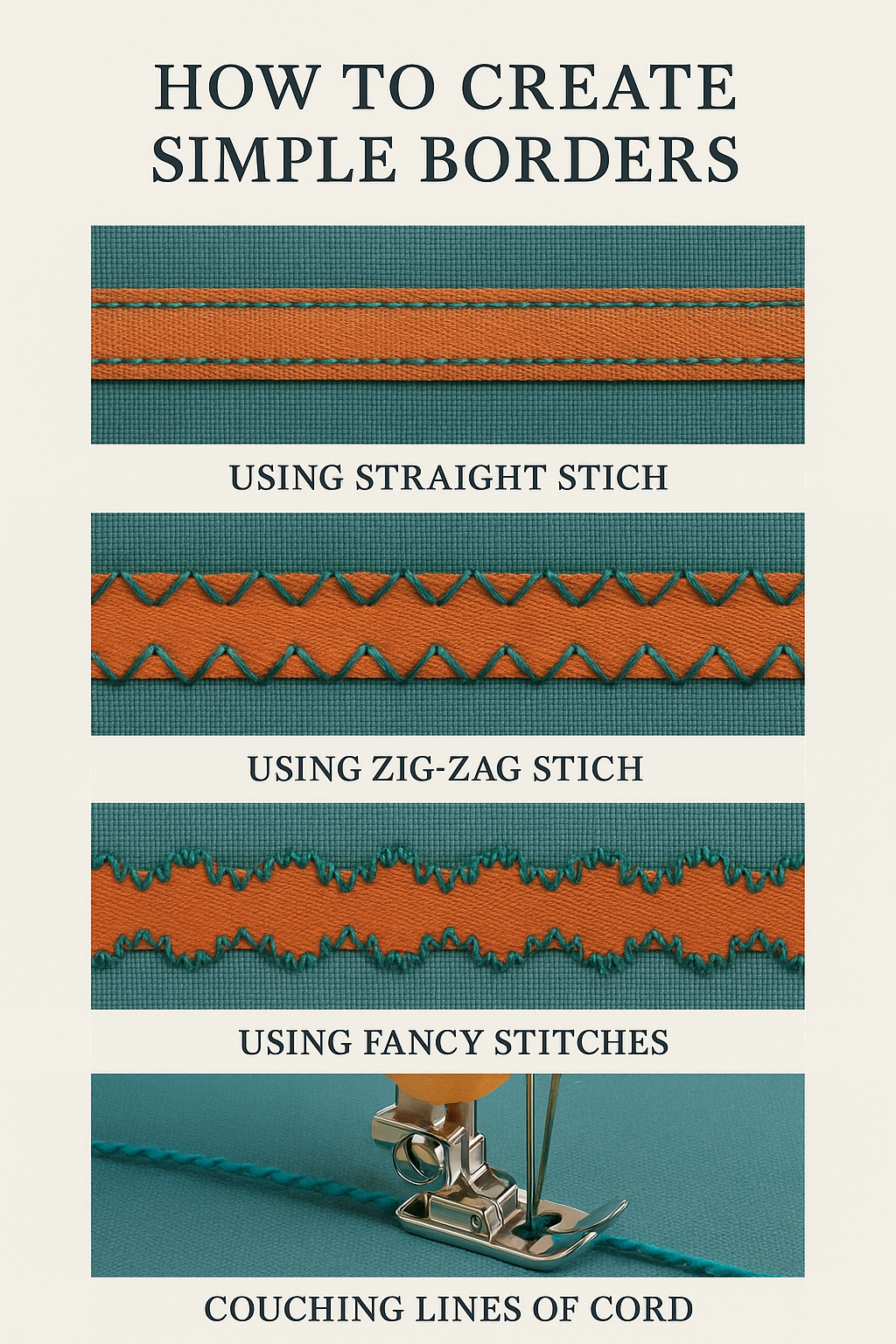
Using Straight Stitch
Straight stitch isn’t just for seams — it can be decorative too. Try stitching a few parallel lines directly on the fabric, or pin a ribbon in place and use straight stitch to secure it. Use matching thread for a subtle finish, or a contrasting thread for a more striking look.
Using Zig-Zag Stitch
Zig-zag stitch adds strength and texture. It’s perfect for holding down the edges of ribbon, braid, or lace. Experiment with different stitch widths and thread colours — matching for a clean finish, or contrasting for something bolder.
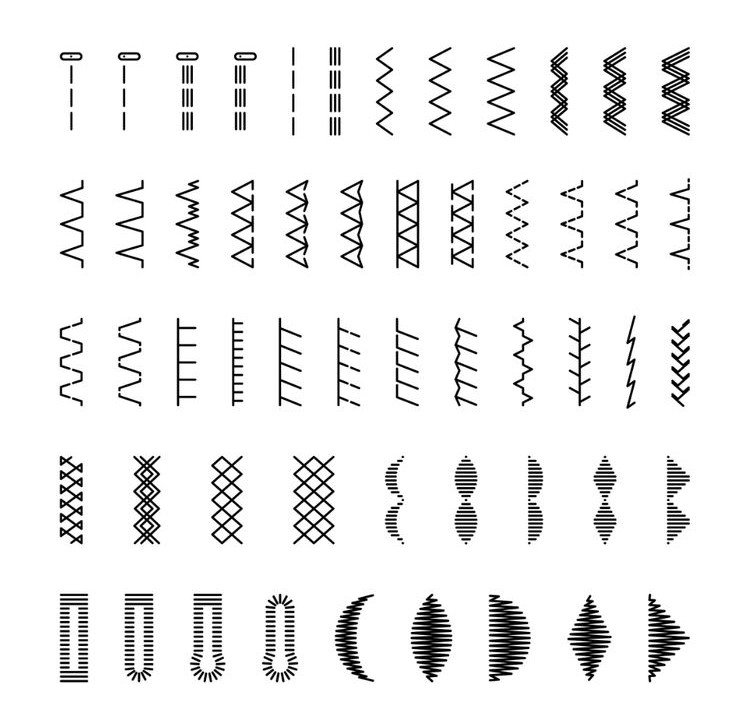
Using Fancy Stitches
Most sewing machines offer a selection of decorative stitches, even basic models. These can be used alone or alongside trims like ribbon or braid to create eye-catching borders. Try varying the stitch length and colour to make each design your own.
- Thread both the top and bobbin with the same colour thread.
- Set the stitch to a close zig-zag.
- Stitch along the edge, then carefully trim the fabric close to the stitching, taking care not to snip any threads.
Couching Lines of Cord with a regular foot
Couching involves stitching over a cord, braid, ribbon, or similar line of material to attach it to your fabric. This technique is useful when you want a defined decorative line that contrasts with your base fabric.
How it works
- Place your cord or trim where you want it on the fabric.
- Use a wide zigzag or specialised couching stitch*.
Adjust the width so the needle lands just to either side of the cord.
- Guide the material under the presser foot so the needle catches the trim while sewing steadily along the line.
When to use it
Couching works well on jackets, bags, sportwear lines and trims where you want a raised, structured finish.
It’s a simple method that gives a neat, polished finish with very little effort.
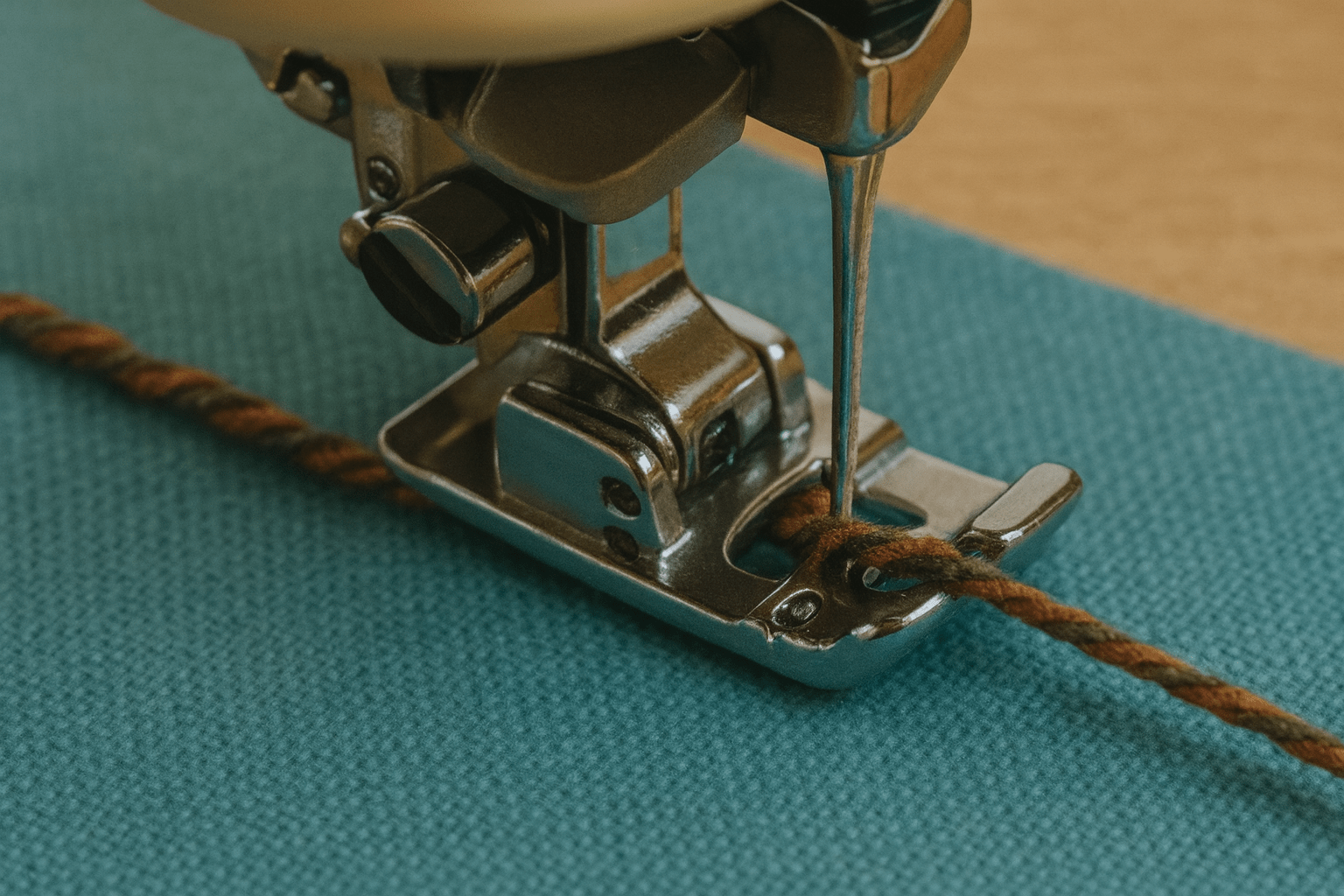
Couching with a Special Foot
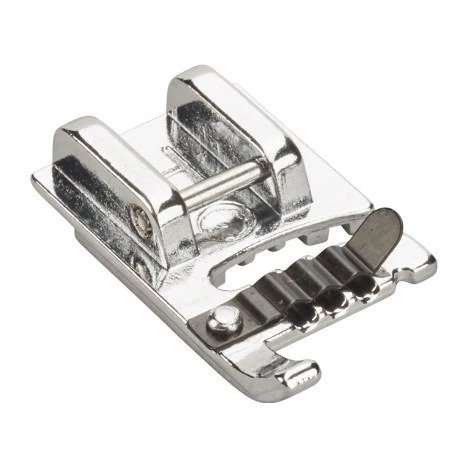
If your machine has a cording foot, you can take this technique further.
Feed one or more cords through the grooves so they’re stitched down as you sew.
The groove width limits the cord size, but you can still use plenty of options — from metallic threads to stranded embroidery floss
The cording foot lets you move the fabric more freely, so you can create wavy, curved, or looped lines. Use matching thread for a subtle hold, or contrasting thread to make the cord stand out.
Decorative Borders in Fashion
While these techniques are often used in home sewing and craft projects, they also appear throughout fashion — from couture to high street. Designers use trims, cords, and ribbon borders to elevate garments and add texture or structure to hems, necklines, and sleeves.
A great example comes from the Kenzo × H&M capsule collection, which featured ribbon-edged dresses and scalloped hems inspired by folkloric embroidery. It shows that decorative borders aren’t just functional — they can define the look and movement of a piece.
Even in everyday clothing, small details like piping, cords, and decorative trims are used to outline shapes and highlight seams. These techniques, described in YouTalent’s fashion construction guide, show how a simple edge treatment can transform a plain garment into something refined and intentional.
Behind the scenes, many of these borders come from specialist suppliers, who provide trims and embroidered ribbons to both designers and independent makers.
The idea also appears in childrenswear. H&M’s Scalloped-Trim Dress for kids shows how even a simple stitched scallop can lift a design. The overlocked scalloped edging turns a plain cotton dress into something that feels crafted and high-end — proof that decorative borders can be both subtle and practical.
Borders are one of those details that make sewing feel personal. They’re a small space to experiment — to test out stitches, threads, and textures — and they can completely change how a project looks. Whether you go for something subtle and tonal or bold and contrasting, it’s worth taking the time to play with what your machine can do. Sometimes, the most creative results come from the simplest stitches.
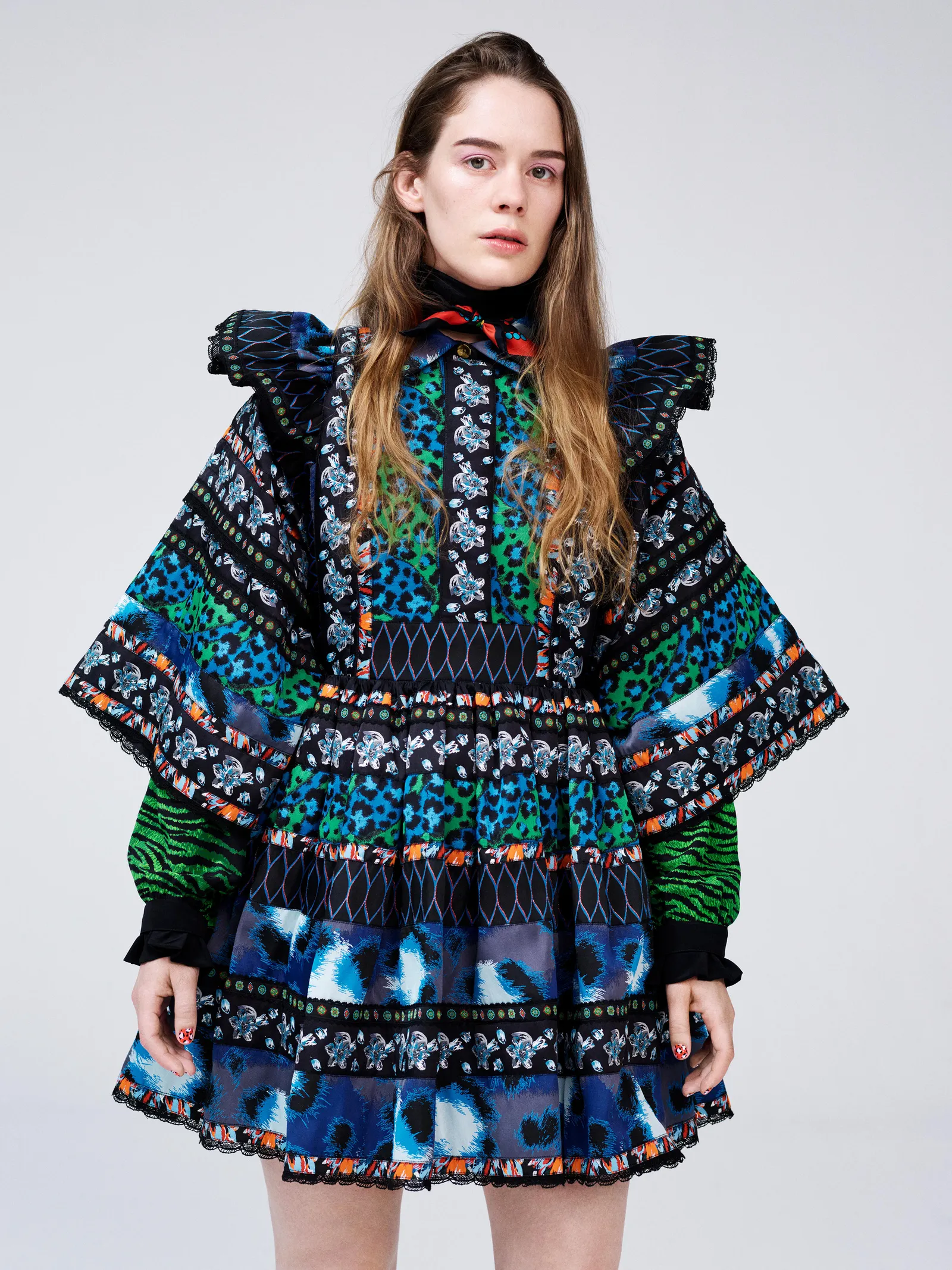
Scallops, stitches, and statement style — Kenzo × H&M at its most creative.
Not Just Pretty — Purposeful
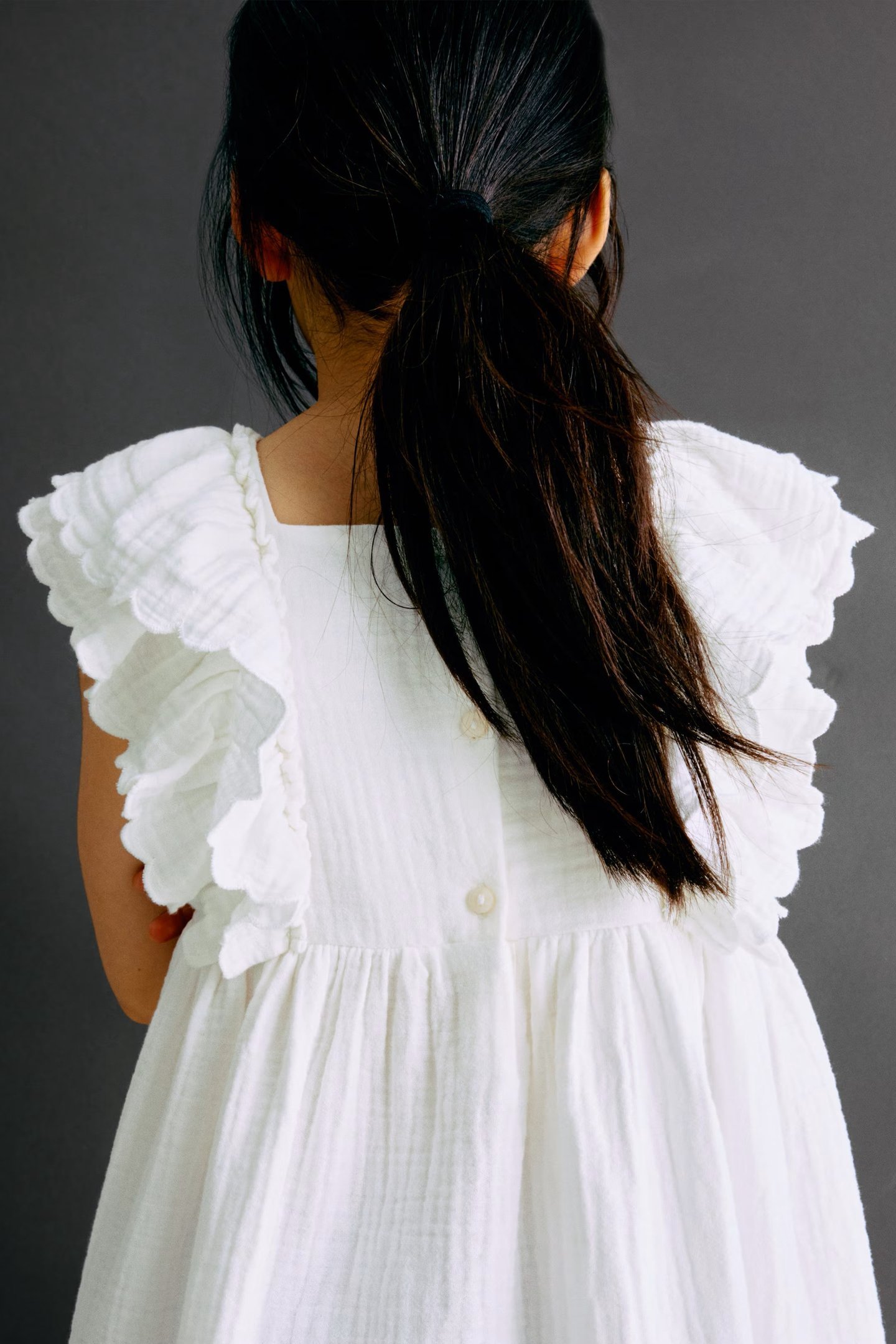
A gentle scalloped edge turns everyday cotton into something special — H&M’s take on playful precision.
Borders don’t need to feel twee or overly decorative. When done well, they can add a high-end, custom finish — the kind of detail that makes a handmade piece feel designed rather than simply made. Think of them as an opportunity to add texture, contrast, or craftsmanship in a subtle way. Experiment with different stitches, threads, and materials until you find combinations that feel like you. The beauty of sewing is that even small changes can completely shift the look and feel of your work.
These same ideas can be adapted easily at home. Whether you’re sewing a topstitch border, couching a cord, or trimming fabric into a scallop, the concept remains the same: a simple edge detail can change the entire character of the design.
Leave a Comment