
Imagine your child wearing clothes that are tailor-made for their body and style. Comfortable, flattering, and fun. Clothes you’ve made yourself with love and care. Sounds amazing, right?
So how do you achieve this sewing dream?
A great place to start is by measuring your child, rather than relying solely on age-based sizing.
While standard age or size sewing patterns work well for many children, they don’t account for individual proportions. Two children who are both 110 cm tall, for example, may have very different torso lengths, leg lengths, or body shapes. Taking accurate measurements helps you choose the right size and achieve a much better fit.
With a few simple steps, you can set yourself up for success every time.
Getting Started With Measuring
Use a Flexible Measuring Tape
A soft, flexible measuring tape is essential for accurate measurements. It should sit comfortably against the body without stretching, sagging, or digging in.
Understand Girth vs Vertical Measurements
Some measurements are girth measurements, taken around the body, while others are vertical measurements, taken along the length of the body. Knowing the difference helps you understand pattern measurement charts and choose the correct size.
Measure Key Landmark Points
You don’t need to take every measurement for every pattern. Focus only on the measurements relevant to the garment you’re making. For example, if you’re sewing joggers, you can usually ignore chest measurements and concentrate on waist and inseam.
Always check the pattern’s measurement chart to see which measurements are required.
Take Measurements in Advance and Update Regularly
Children grow quickly, so it’s a good idea to take measurements ahead of time and update them regularly. You can record them in a notebook with the date, or use my FREE printable measurement guide to keep everything organised.
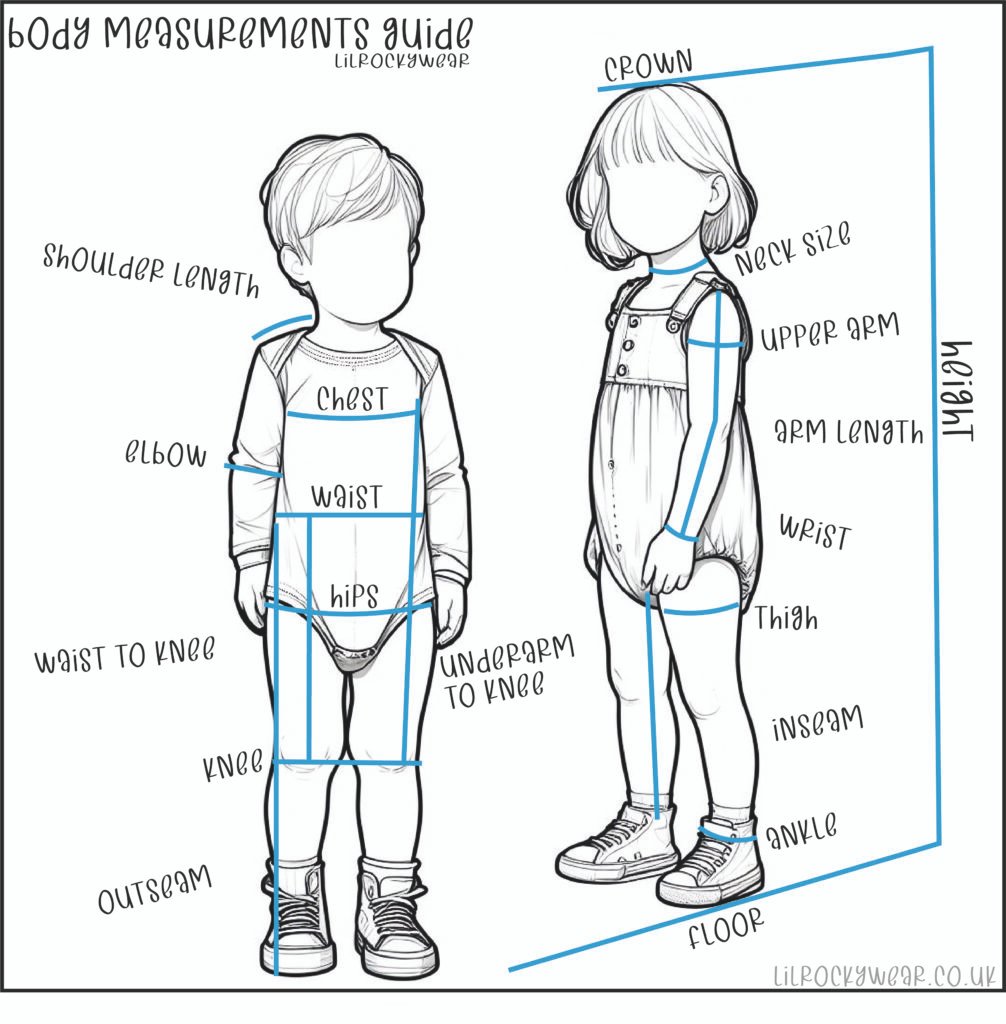
Girth Measurements (Around the Body)
Chest: Measure around the widest point under the armpits, including the shoulder blades.
Waist: Measure at the narrowest point, or where the body naturally bends side to side.
Hip: Measure around the top of the hip bones, including the fullest part of the buttocks. This is often, but not always, the widest point.
Thigh: Measure around the upper leg at its widest point.
Ankle: Measure around the bony area just above the foot.
Upper arm: Measure around the widest point between the shoulder and elbow, with the arm slightly bent.
Wrist: Measure around the bony area just above the hand.
Elbow: Measure around the bend of the arm.
Vertical Measurements and Key Points
Crown: The top of the head. This is the starting point for height measurements.
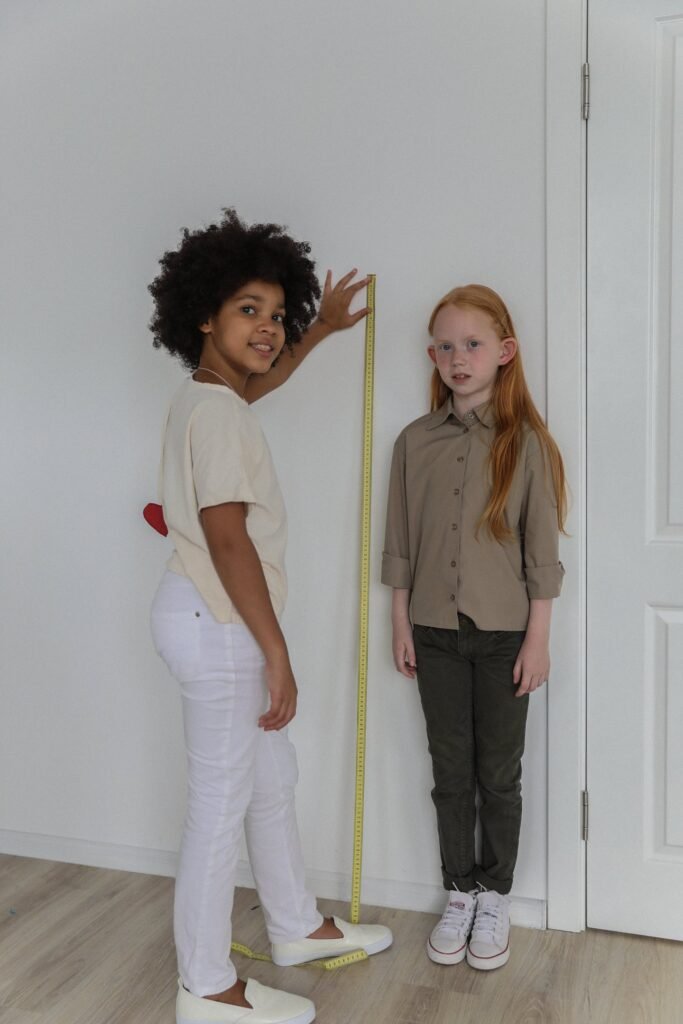
Height: Measure from the crown to the floor with the child standing upright, feet together. A helpful tip is to mark the height on a wall and measure from the floor to the mark.
Arm length: Measure from the edge of the shoulder down to the wrist bone.
Shoulder (landmark point): Located at the centre of the shoulder, between the neck and arm, level with the prominent bone at the back of the neck (the bottom cervical vertebra).
Shoulder length: Measure from the base of the neck to the top of the arm.
Outseam length: Measure from the waist down to the floor.
Back waist length: Measure from the shoulder or bottom cervical vertebra to the waist.
Inseam length: Measure from the crotch to the floor, with the child standing and legs slightly apart.
Key Takeaways
Body Measurements
Always measure the body, not the clothes.
Girth measurements are taken around specific landmark points.
Younger children, regardless of gender, tend to have similar proportions.
If a child falls between sizes on a pattern, it’s usually best to choose the larger size and adjust for fit.
Grading Between Sizes
Once you’re comfortable taking measurements, the next step is learning how to grade between sizes for an even better fit. Keep an eye out for my upcoming blog post on grading.
Now that you know how to take accurate measurements for height, chest and waist, you can use those numbers to find your pattern size. Try my Interactive Size Guide & Pattern Size Finder to enter those measurements and get your recommended size: https://lilrockywear.co.uk/size-guide/
Free Measurement Guides
To make measuring easier, I’ve created free printable measurement guides you can download and use again and again:
Measurement Guide – Download
Printable Measurement Chart – Lil Rocky Wear Download
Leave a Comment